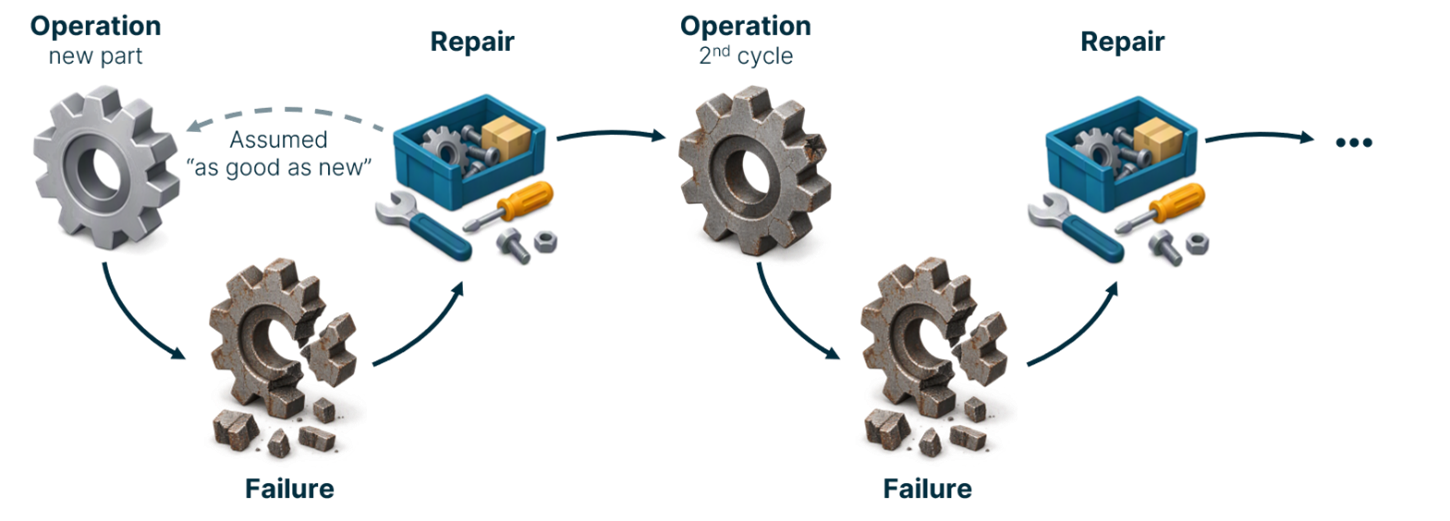
Do your assumptions reflect reality?
Why does this matter? Because assumptions about repair effectiveness directly influence operational decisions. Maintenance strategies, spare part inventories, component failure analyses and demand forecasts often rely on assumptions regarding component condition after repair. If those assumptions do not reflect reality, forecasts and planning decisions may become structurally biased.
This does not mean that repairs never restore items to good-as-new condition. In many cases they may. The key question is whether this assumption has been validated using your own data.
Instead of asking “What is our MTBF?”, it may be more valuable to ask:
- Do repaired items perform the same as they did when new?
- Does performance change after multiple repair cycles?
- Are some repair types more effective than others?
- Are we treating repaired and new items as identical without evidence?
- Could our forecasts improve if we accounted for differences between repair cycles?
Many organisations make assumptions because they are reasonable, familiar, or have always been used. However, reasonable assumptions are not always correct assumptions. The data may tell a different story. The organisations that gain the most insight are often not the ones with the most data, but the ones willing to challenge the assumptions hidden within it.