Duplicate spare parts records are a hidden source of inefficiency in many MRO environments. They reduce inventory visibility, complicate planning activities, and often lead to unnecessary stock investments.


A duplicate is a single spare part that exists multiple times in the ERP system under different material numbers, descriptions and locations. As a result, organisations manage the material numbers separately, fail to consolidate demand, remain unaware of their actual total inventory position and hold double inventory.

While duplicate records are common, they are not inevitable. Good processes prevent new duplicates, while proven methods can clean up existing ones.

What are duplicate spare parts?

Duplicate spare parts are records that represent the same physical and technical item, but exist under different material numbers or descriptions. A bearing, for example, may be registered once under a and a second time under a self-generated part number. Technically, both records refer to the same part, yet the ERP system treats them as completely separate materials.

Duplicate spare parts can exist at different levels:

  • Within a single warehouse or location
  • Across multiple sites using the same ERP environment
  • Across multiple sites operating in different ERP environments

The complexity of identification increases significantly at each level. A duplicate hidden within one warehouse may be relatively easy to detect. Duplicates spread across different locations, different languages, different naming standards, or even different ERP systems are considerably harder to uncover.

It is important to distinguish duplicate records from related situations such as interchangeable and superseded parts. These are not true duplicates, because they do not represent exactly the same part. However, if they are not linked and managed correctly, they create many of the same problems as duplicates, including excess inventory, fragmented demand and supply, and poor visibility.


Why duplicate records are created

There are several common reasons why duplicate records are created, most of which relate to the master data creation process.

If an organisation doesn’t have consistent naming conventions, the risk of creating duplicates increases. One engineer creates a material using the description from the supplier, while another uses a technical specification. Without a standard structure, the same part can be created multiple times without raising concerns, especially if the part creation process doesn’t include duplicate checks. If users cannot easily determine whether a part already exists (or do not check), creating a new material often appears faster than searching for an existing one.

The duration of the creation process can also drive unwanted behaviour. When the material creation workflow slows or becomes overly bureaucratic, maintenance and procurement teams may seek workarounds. Teams order parts uncoded, use temporary descriptions, and eventually create new material records to support urgent operational needs.

Mergers, acquisitions and ERP migrations introduce another challenge. When multiple systems are consolidated, overlapping material masters are often transferred into the new environment without further thought.

Let us do a Maturity Assessment

How to identify duplicate spare parts

A proper duplication check combines data analysis with manual validation. Multiple data points can be used to find records that potentially represent the same item but, given the often lacking data quality, require validation to be sure. Common data-driven matching criteria include:

  • Material descriptions
  • Manufacturer names
  • Manufacturer part numbers
  • Supplier information
  • Technical characteristics and specifications
  • Equipment relationships and bill-of-material references

The more consistent and complete these fields are, the easier duplicates are to identify.

Unfortunately, however, duplicate detection is rarely a simple exact-match exercise. Spare parts data often contains abbreviations, spelling variations, different languages and inconsistent formatting. A bearing described as “BRG SKF 6205” may be technically identical to a material registered as “Bearing 6205 SKF”.

Because of these complexities, we recommend using more advanced matching techniques to identify likely duplicate candidates across large datasets.

The role of AI and human validation

Artificial Intelligence (AI) can significantly accelerate the identification of duplicate spare parts. Large language models can analyse descriptions, recognise patterns, compare supplier information, and identify similarities that are difficult for humans to detect manually. Unlike humans, AI thrives on extremely large datasets. With all available information, AI can identify potential duplicates, but also indicate a confidence level, from a high likelihood of a duplicate to a lower likelihood. This helps in prioritising the validation process.

Identifying a potential duplicate does not automatically mean records should be consolidated; validation remains a critical step. Engineering, maintenance and procurement specialists must confirm whether materials are technically equivalent. A seemingly identical part may differ in certification, revision level, approved supplier status or application. Validation typically consists of a data review, followed by a physical inspection of the part to confirm that both parts are identical.

How to prevent new duplicates

Preventing new duplicates starts with a standardised parts creation process. Whether this process is centralised or decentralised matters less than ensuring all requests follow the same workflow. The workflow should be based on the following principles:

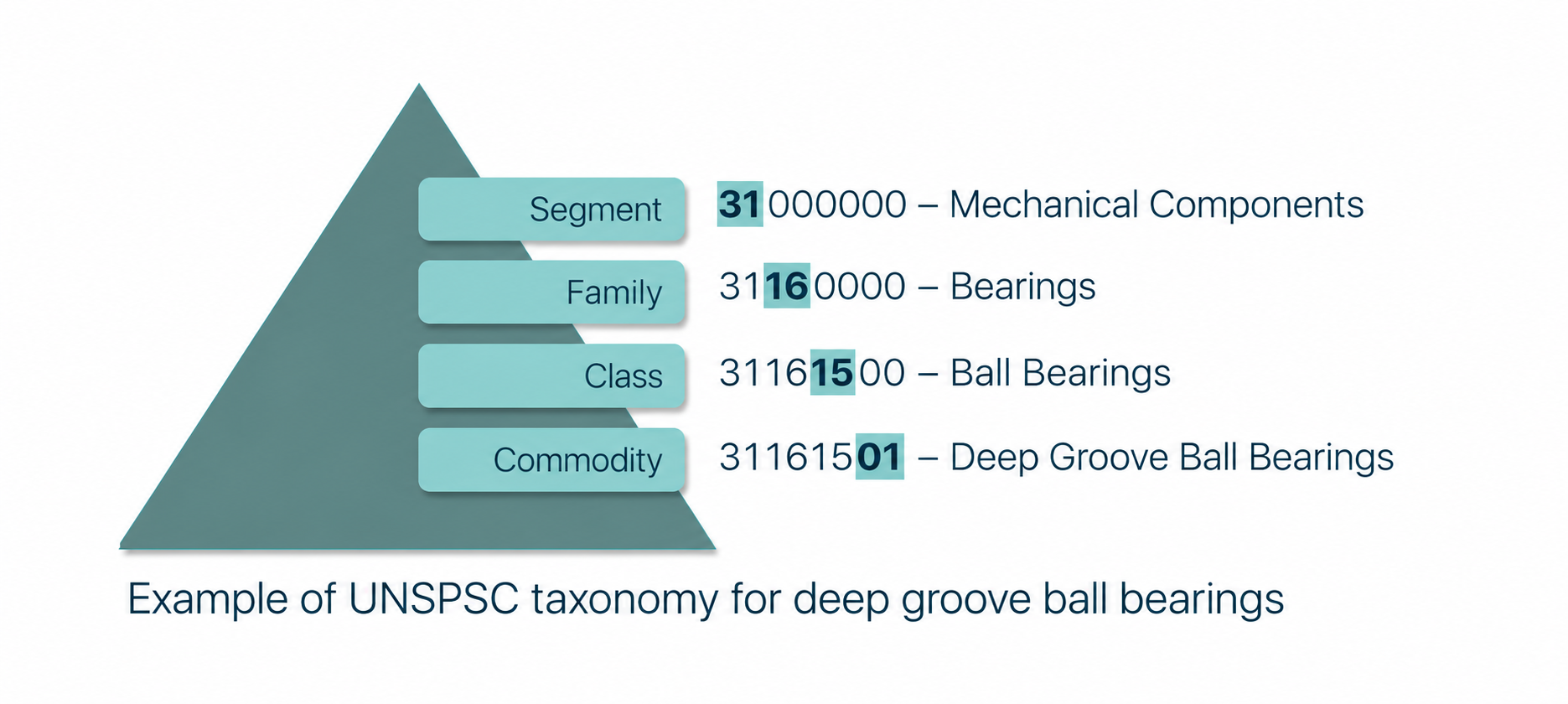
  • Use standardised naming conventions: Standard taxonomies increase consistency across the organisation. When materials are described using the same structure and terminology, the risk of creating duplicate records is significantly reduced.
  • Check for duplicates: Before a part is created, a review should be done for potential duplicates. This can follow the same methods as previously described for duplicate identification.
  • Streamline the process: The creation process should not take too much time. While capturing comprehensive information is valuable, requiring too many mandatory fields can encourage users to bypass the process or create unofficial workarounds. A practical approach is to require only the most critical fields during creation and allow less essential information to be completed later.

Even with good processes, duplicates will happen. Therefore, periodic checks should be implemented to help identify new duplicates. Periodic reviews allow teams to address issues early and continuously improve data quality.

How Gordian can help

Many organisations know duplicates exist, but struggle to quantify the problem or determine where to start. Gordian supports organisations through a master data assessment that evaluates both data quality and underlying processes. This includes an initial analysis of potential duplicate spare parts, improvement opportunities, and risks in the current master data management setup.

Beyond identifying issues, we help organisations design and implement practical material creation processes and have developed our own beta duplicate identifier.

Want to understand how many duplicate spare parts exist in your environment and how to prevent new ones from appearing? Contact Gordian to discuss how we can help you!

Want to identify and prevent duplicate spare parts?

Gordian helps organisations identify duplicate MRO records, improve master data quality, and prevent unnecessary inventory investments. Contact our specialists to assess your current spare parts data, uncover potential duplicates, and identify practical opportunities to improve data accuracy, inventory visibility, and material creation processes.

Wouter Heijnen